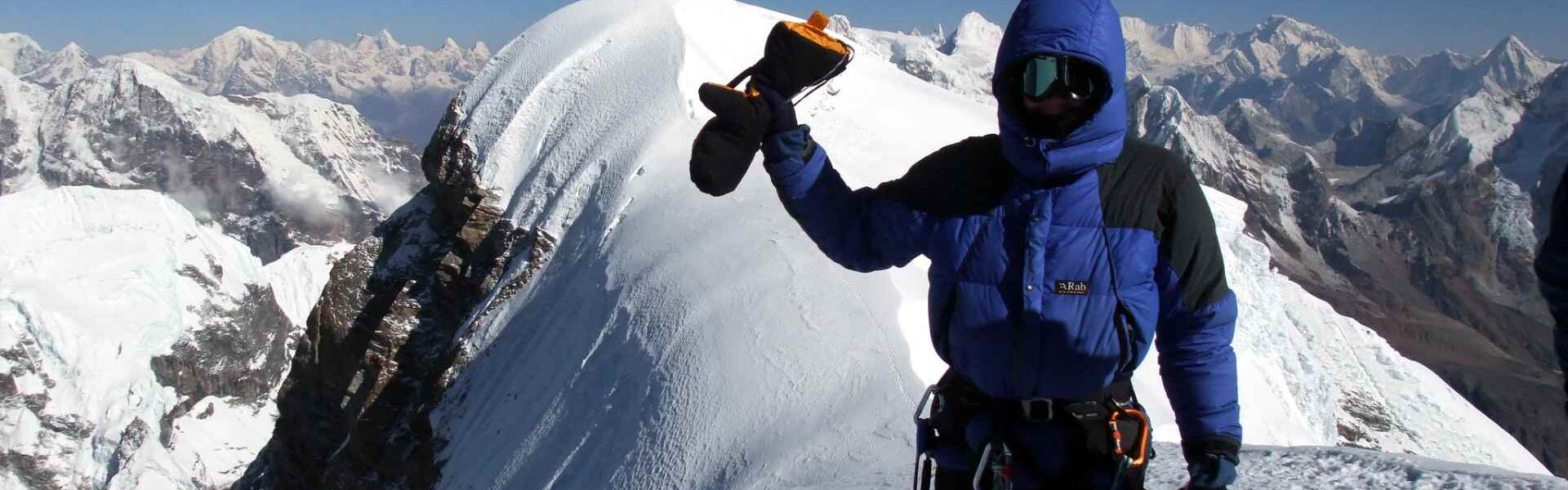

Mera Peak is one of the tallest trekking peaks in Nepal, located so high at an altitude of 6,476 meters (21,246). It’s a singular challenge for mountaineers and trekkers who want to test their skills while experiencing the elemental beauty of the Himalayas. And my Mera Peak Trek experience turned out to be one of the most transformative journeys of my life, and here is everything I learned. Here is your complete guide to climbing Mera Peak.
Mera Peak climbing tips The journey starts in Kathmandu, the colorful capital of Nepal, where you will prepare for the trek. Getting permits, including the Mera Peak climbing permit, is the first step to take, which is actually very important for trekkers. After a day of logistics, we flew to Lukla, the entrance to the Khumbu region. Our trek from Lukla took us through forested areas, suspension bridges, and several Sherpa villages, including Chutanga and Thuli Kharka. The first few days of the hike are relatively easy, leaving plenty of time to acclimatize to the altitude.
Proper acclimatization is a must in Mera Peak as there is a big gain in altitude. We employed a routine of climbing higher and sleeping lower so we could acclimatize. While this reduces the risk of suffering from altitude sickness, it also strengthens you for the more difficult areas that lie ahead. We stayed in a small village Kothe for a day and then continued to the base camp, which is located at 5,300 m (17,388 ft) altitude. From here, actual climbing begins and the terrain takes a hard turn.
At base camp we were taught the technical part of climbing. A guide walked us through the use of crampons, ice axes, rope techniques, and glacier travel, all of which were critical to the upcoming summit push. The path from base camp to high camp is not an easy one; it involves steep, icy terrain and deep snow that needs to be navigated carefully. As we ascended, the altitude took its effect, and each step grew more challenging. By the time we arrived at the high camp at 5,800 meters (19,029 feet), the air was thin and the cold was gnawing. We rested, had a light meal, and readied ourselves for the last push.
We woke up early that day, summit day. We departed the high camp around 2 a.m., the sky above filled with stars. The air was cold, and the wind made the ascent even more difficult. For the first few hours, we walked up a snow slope, the ice axes in our hands propping us up. As we gained elevation, the sun blared and the wind picked up, and we started to tire. But it was the view from the summit of Mera Peak that made every step worthwhile. When I got to the top I was hit by a view, of the faces of Everest, Lhotse, and Makalu lined up in a row. It was an emotional moment, three weeks of hard work, toil and determination culminating.
The descent was equally challenging, with an emphasis on the condition of the ice and snow. We hiked back to base camp and lay back to the glorious feeling of accomplishment. When it comes to fitness accomplishments, conquering Mera Peak is not just a physical feat but a mental one as well. It pushed my limits and instilled the values of passion and teamwork. Mera Peak is an adventure to the summit viewpoint that challenges you to confront your limits — but the breakthroughs and views of the Himalayan chain you unlock are well worth it.
Mera Peak — Only later did I learn more about it.
The Mera Peak conquest dream started out as a soft adventure whisper, a desire/need to ascend greater heights, both literally and metaphorically. Mera Peak at 6,476 meters is one of the highest trekking peaks in Nepal, which is a great challenge for mountaineers and trekkers. Although less technical than many Himalayan shorts, the elevation and demanding landscape mean that the trek is a serious commitment, requiring as much endurance as mental fortitude. The Himalayas had always fascinated me, their majestic heights and the mystique about them. Climbing Mera Peak was more than reaching the summit of a mountain, I also wanted to push my body to the limit while soaking in the remote beauty of Nepal and the culture of the Sherpa people. It was an adventure equal parts exhilaration and terror, expectation and apprehension, but most of all it was an opportunity to live a fantasy that most never get to realize. But the summit felt more within reach with every footstep, even if it still seemed a formidable challenge that warranted respect. Reaching the summit of Mera Peak was more than just standing on top — it was about going beyond limitations, seeking the unknown, and finding a part of yourself along the way.
Preparing for the Adventure
Training for an adventure of Mera Peak’s caliber encompasses more than physical prep, as you also want to make sure that you’re mentally, logistically, and ultimately practically ready as well. The first thing I had to do was to make sure I had the proper equipment, which consisted of crampons, ice axes, a harness, and high-altitude warm clothing. I also dedicated months to building up my fitness level with cardio workouts, strength training sessions, and endurance hikes. Although Mera Peak is classified as a trekking peak, its altitude plus technical challenges on icy terrain require plenty of preparation. I also worked on the mental aspect, as I knew the discomfort of high-altitude climbs required a high mental pain-tolerance threshold, physically and psychologically. Beyond individual fitness, it was critical to research the practical details of the trek. You need to get climbing permits for Mera Peak like Mera Peak climbing permit and TIMS card (Trekkers’ Information Management System). These permits are mandatory for any trek in Nepal and ensure that climbers are registered in the event of an emergency. I would also employ experienced guides and porters to provide valuable knowledge of the mountain and ensure safety practices. It was all about preparation to make sure that I would not only make it up there but also enjoy the journey to one of the most accessible and yet challenging peaks in the Himalayas.
Understanding Mera Peak
Mera Peak is a trekking peak in the Khumbu region of Nepal, known for excellent panoramic views and a strenuous but achievable climb. At 6,476 meters (21,246 feet), Mera Peak is not one of the “8,000-meter giants,” but it’s classified as a high-altitude peak and offers trekkers a rare chance to experience the Himalayas at close quarters. What makes Mera Peak unique is that it provides one of the finest views of Everest and other Himalayan giants, including Makalu, Lhotse, and Cho Oyu. Unlike some of the more technically challenging peaks in Nepal, Mera Peak does not require advanced climbing skills, making it an attractive option for aspiring climbers who want to take on a high-altitude mountain. The peak does still require a high level of physical fitness as trekkers must navigate rocky terrain, glaciers, and icy slopes, along with gradual acclimatization. The climbing path to Mera Peak is just as varied, guiding climbers through verdant woodlands, charming Sherpa towns, and desolate high-altitude plains. With its rugged beauty up top, and the sensation of isolation that comes when you reach its summit, the mountain is on many adventure enthusiasts’ bucket lists. The unique combination of accessibility and challenge surrounding Mera Peak underlines just how special this climb is, particularly the life-changing journey it can offer.
Getting to the Starting Point
Mera Peak route The journey to Mera Peak formally starts in Kathmandu, the bustling capital of Nepal, where trekkers need to arrange for permits and logistics. Once in Kathmandu, the next step is to take an exhilarating domestic flight to Lukla, a small town in the Khumbu region and the jumping-off point for most treks in the Everest region. One of the most adventurous (and terrifying) parts of the trip is flying to Lukla, home to the notoriously short and steep runway at Lukla’s Tenzing-Hillary Airport. The surrounding mountains seen from the plane are fantastic before zooming down into Lukla; almost like flying into the very heart of the Himalayas. The real adventure starts when you land in Lukla. The trek begins from Lukla, with a short walk to Phakding, a village at the foot of the mountains, where the trail weaves through green pastures and suspension bridges. The trek itself is a slow ascent that allows trekkers to acclimatize to the altitude and a taste of the beauty and peace of the Khumbu region. Trekking onward, visitors can walk alongside Sherpas and other trekkers, learning more about the culture and customs of the area. This is a strenuous trek, with the trail leading through gorgeous Towns with stunning vistas, All this journey will reward you with stunning mountain views.
Trekking to the Base of Mera Peak
Mera Peak Base Camp Trek is a thrilling and challenging adventure in the Khumbu Region of Nepal. The trek begins with a gradual climb through scenic villages like Chutanga and Thuli Kharka, showcasing the surrounding peaks and the vibrant culture of the Sherpa people. The initial part of the trek traverses through verdant forests but once you climb higher, the surface turns more arid and rocky. The journey to the Base Camp is about 4-5 days with gradual climbs each day which works to help you acclimatize. Along the way, trekkers can experience traditional Sherpa villages and local hospitality, staying in teahouses where they are provided with hearty meals to warm up from the cold. Arriving at Mera Peak Base Camp (5,300m or 17,388 feet), trekkers are treated to gorgeous views of Makalu, Chamlang and Baruntse and the surrounding peaks. However, reaching Base Camp is only half the journey. Alpine barrens are often high, cold sites lacking fertilizer types and nutrients (and/or places where guano is only infrequently deposited). This is where the real climbing begins, and the feeling of solitude and adventure grows as the summit gets nearer.
Acclimatization and Altitude
One of the biggest aspects of any high-altitude climb is acclimatization, and Mera Peak is no different. As you gain altitude, the concentration of oxygen in the atmosphere drops, and your body takes time to adapt to the lower levels; lack of acclimatization makes one highly vulnerable to altitude-related illnesses. The journey towards Mera Peak is planned to offer gradual elevation gains and allow climbers plenty of time to acclimatize with rest days at spots such as Kothe, Thuli Kharka, and the Base Camp. The best adaptation technique is the “climb high, sleep low” routine that climbers follow, where they hike to a higher elevation during the day and sleep at a lower elevation. This technique allows the body to acclimatize to less oxygen by nudging to make more red blood cells that transport oxygen around the body. Trekking also includes acclimatization days during which trekkers do light things like short hikes to nearby viewpoints so that the body gets used to the high altitude but doesn’t work too hard. It’s important to listen to your body during the trek because symptoms of altitude sickness — including headaches, dizziness, and nausea — can emerge at any point. Proper nutrition, hydration, and rest are key elements of overcoming the challenges of high-altitude environments. The acclimatization process must be followed closely to decrease the risks associated with altitude sickness, increasing the chances of successfully summiting Mera Peak.
The Climb to Mera Peak Summit
Mera Peak base camp The ascent to Mera Peak’s summit is the end of days of trekking and preparation, and it starts with a very early rise from high camp. The initial hours are brutal, with trekkers climbing through deep snow, iceberg slopes , and rocky ground. The peak is relatively non-technical, but conditions at altitude make it a challenging climb. The air gets thinner with each step and the cold stings when the wind blows over the high-altitude land. But, the journey is so much worth it. Led by experienced Sherpas and mountaineers, we climbed in increments, stopping often and regulating our speed to ensure that we weren’t overexerting ourselves. Finally, we approached the much-anticipated summit, and the sun started to shine and paint the surrounding peaks, Everest, Makalu, and Lhotse in gold. The last bit to the top was a combination of climbing on snow and ice so needed to employ some techniques and have steady feet. The feeling of reaching the summit of Mera Peak was indescribable. The climb was unforgettable, partly due to the feeling of accomplishment, partly due to the beauty of the surrounding mountains, and partly because I knew I had pushed myself to the limit. At the summit we took photos and celebrated and realized how far we had come to achieve this great accomplishment.
Safety and Risks on Mera Peak
As is the case with any high-altitude climb, safety is the number one priority when trekking up to Mera Peak. Although it is marked as a trekking peak, the dangers of high altitudes, unpredictable weather patterns, and tricky terrains are plenty. Altitude sickness is the single most concerning issue that can occur suddenly and without any signs. It’s a common danger, and symptoms such as the common headaches, dizziness and nausea are symptoms of needing to acclimatize — so it’s important to be careful and acclimatize properly.” And, we adhered to the classic principle of “climb high, sleep low,” helping us combat the impacts of altitude and allowing our bodies to acclimate to the thinner air. The weather can also turn quickly in the mountains and is another major element in ensuring the safety of those in the expedition. And sudden snowstorms, high winds, and freezing temperatures can all create situations where climbers need to be prepared for any eventuality. I brought what I needed, including a down jacket, gloves, a hat, and crampons, to keep warm and safe. Icefalls, crevasses and steep slopes also pose technical challenges, particularly during the final ascent to the summit. A capable guide and support crew are needed to safely navigate these challenges. Mera Peak is more accessible than many other taller peaks, but climbers still need to be aware of the risks inherent in high-altitude mountaineering and approach their climb accordingly to enjoy a successful and safe summit.
The Summit and Beyond
Mera Peak preparation The success of reaching the highest point of Mera Peak is certainly a big day, but the journey doesn’t end there. Peak macaw at the top overlooking a large extent of Everest masses, Makalu and peak complexes. On reaching the summit, a feeling of awe and humility sweeps through you as you learn that you’ve just summited one of the highest peaks in the world. But the climb down is just as vital, and on its own, poses its own set of challenges. The summit of Mera Peak is a long way down and this is frequently underestimated, the descent is as grueling as the summit! The frozen, uphill journeys necessitated mindful maneuvering to not have the option of slipping or losing support. Moreover, as the body tires, it is needed to focus and maintain its energy levels. Once safely back at Base Camp, there’s a sense of both relief and satisfaction — knowing that you completed the climb, but even more so the journey it took to get there. The Mera Peak summit is as much a psychological or emotional accomplishment as it is a physical exercise. It is an unforgettable reward to stand atop the world, if only for a fleeting moment, and the gripping climb tests your limits in endurance, determination, and mental fortitude.
Lessons Learned
Mera Peak permit Looking back on my trip to Mera Peak, I know that this experience was about more than just climbing to new heights; it was about me reaching new heights within myself. If I have learnt anything from that experience it is about never underestimating the gravity of preparation and humility. The climb was hard: moments of self-doubt, unbearable cold, and fatigue, moments when the summit seemed like an impossibility. Yet, amid grit, I learned to keep moving forward, if not to the next goal, at least to the next step. I also discovered that to succeed in mountaineering, it’s not only strength in the top half, but also strength in the bottom half, as well as a balance of physical fitness, mental fortitude, and chestnut to adapt to the unknown challenges that the mountain throws at you. Support from the team was crucial. The Sherpas and guides offered not just technical ability but also an encourager when the going got rough. Through it all, my trek to Mera Peak reminded me of the importance of patience and perseverance. Every moment on that mountain taught me something, teaching me how heavy the other’s bag can be, that the end of the journey is not the peak, the top to arrive, but that what we overcome, is the true summit of the mountain.
Tips For Future Climbers
There are a few things you can do to prepare for climbing Mera Peak and to ensure a safe and successful ascent. The first step is to get acclimatized. Acclimatize properly so you don’t get altitude sickness—this could ruin your climb. Follow the “climb high, sleep low” approach, and pay close attention to your body. If you experience symptoms of altitude sickness, don’t push through; it’s usually best to descend to a lower altitude. Secondly, you need the right gear to keep safe and comfortable at altitude. Go for quality clothing and equipment — crampons, ice axes, and a good-quality down jacket. The weather can be volatile, so prepare for snow, rain, and freezing winds. Third, you can ensure that you have the best guides and porters who are well aware-of the mountain and can assist you during your trek. Mera Peak itinerary They will have to be invaluable in the lay of the land and the safety protocols. Finally, take your time as you ascend. Take the time to do it, stay hydrated, and rest when you feel like it. The summit will still exist, but you must be kicked back and cautious about the mountain you’re climbing.
Read more: Why Your Ultimate Summit Is an Impossible Summit
Reaching the summit of Mera Peak was the realization of a dream, but the adventure didn’t stop there. Actually the best lessons of the trek were learned after summiting. It was not just a physical challenge, but a lesson in endurance, teamwork, and the importance of camaraderie. It was about immersing myself in the majesty of the Himalayas, learning from the culture of the Sherpa people, and developing a deeper respect for nature’s power and unpredictability. In the end, it wasn’t about standing on top of the peak, it was about the adventures, the sights, the lessons learned, and the adventure of the journey. As I exhaustedly reached another plateau, I realized (the short-distance version of) every peak will be summited one boulder at a time, and that the journey is half the reward.